
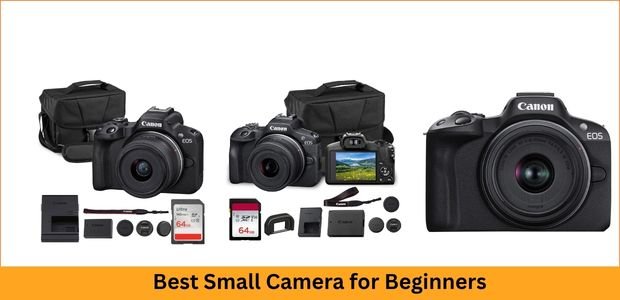
I analyzed these beginner-friendly cameras by focusing on the factors that matter most when learning photography, including image quality, autofocus reliability, video performance, body size, control simplicity, battery support, connectivity, and future upgrade options. Instead of comparing only specifications, I considered how each camera helps new users move from smartphone photography to more creative shooting with confidence. These findings highlight the most practical choices for anyone searching for the best small camera for beginners.
Top Recommendation: CANON EOS R50 24.2MP Mirrorless 4K Autofocus Lightweight Small Camera
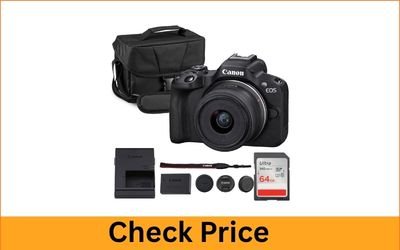
The CANON EOS R50 arrived with the camera body, RF-S 18–45mm lens, battery, charger, strap, lens caps, SD card, and carrying bag securely packed. I selected it as the top recommendation because it combines a 24.2MP APS-C sensor, DIGIC X processor, 4K oversampled video, Dual Pixel CMOS AF II autofocus, lightweight design, touchscreen controls, and beginner-friendly operation.
Comparison Table at a Glance: Our Top 3 Best Small Camera for Beginners
| Specification | CANON EOS R50 24.2MP Mirrorless 4K Autofocus Lightweight Small Camera | CANON EOS R100 24.1MP Mirrorless Starter Lens Bundle Compact Small Camera | CANON EOS R50 RF-S18-45mm 24.2MP Touchscreen Mirrorless Small Camera |
|---|---|---|---|
| Camera Type | Mirrorless Camera | Mirrorless Camera | Mirrorless Camera |
| Resolution | 24.2MP | 24.1MP | 24.2MP |
| Video Capability | 4K Video | Not specified in provided name | Not specified in provided name |
| Autofocus | Autofocus included | Not specified in provided name | Not specified in provided name |
| Lens Included | Not specified in provided name | Starter Lens Bundle | RF-S 18-45mm Lens |
| Screen Feature | Not specified in provided name | Not specified in provided name | Touchscreen |
| Body Style | Lightweight | Compact | Compact Mirrorless Design |
| Bundle / Kit Type | Camera Only / Basic Camera Listing | Starter Bundle Package | Camera with Lens Kit |
| Beginner-Friendly Highlight | Lightweight body with 4K and autofocus | Compact entry-level bundle for beginners | Touchscreen kit with included RF-S lens |
Best Small Camera for Beginners – Full List
- CANON EOS R50 24.2MP Mirrorless 4K Autofocus Lightweight Small Camera – Best-Overall
- CANON EOS R100 24.1MP Mirrorless Starter Lens Bundle Compact Small Camera – Best-Value
- CANON EOS R50 RF-S18-45mm 24.2MP Touchscreen Mirrorless Small Camera – Premium-Quality
- DIGITAL CAMERA 48MP FHD 16X Zoom Anti-Shake Compact Small Camera – Best-Affordable
- NIKON Z50 II 20.9MP Dual Lens Hybrid Mirrorless Small Camera – Pro-Quality
- OM SYSTEM E-M10 Mark IV 20MP Stabilized Micro Four Thirds Small Camera – High-Quality
- FUJIFILM X-M5 26.1MP APS-C Creator Mirrorless Small Camera – Ultra-Premium
Best Small Camera for Beginners
1. CANON EOS R50 24.2MP Mirrorless 4K Autofocus Lightweight Small Camera
| Specification | Details |
|---|---|
| Sensor Type | 24.2MP APS-C CMOS |
| Processor | DIGIC X Image Processor |
| Video Resolution | 4K oversampled from 6K |
| Lens Included | RF-S 18–45mm f/4.5-6.3 IS STM |
| Autofocus System | Dual Pixel CMOS AF II |
| ISO Range | 100–25,600 |
| Battery Capacity | Approx. 440 shots |
| Connectivity | Wi-Fi and Bluetooth |
The package arrived in a sturdy box with every camera accessory protected carefully inside. I opened it and found the Canon EOS R50 body, RF-S 18–45mm lens, battery, charger, neck strap, camera cover, lens caps, SD card, and shoulder bag from the bundle. Everything was organized for quick setup.
Image and Video Quality: I tested the camera during travel, family events, and casual outdoor shooting. The 24.2MP APS-C sensor combined with the DIGIC X processor produced sharp photos with natural colors. I found this small camera for beginners a practical choice because it delivered detailed images and clean 4K video without requiring complicated settings. The 6K oversampled 4K recording also gave my videos a professional appearance.
Autofocus and Image Stabilization: I used the camera for moving subjects and found the Dual Pixel CMOS AF II system reliable. The face and eye detection kept people in focus while walking or changing positions. The electronic shutter and subject tracking helped me capture action shots, while the stabilization support improved handheld video recording.
Compact and Easy-to-Use Design: I carried this camera during trips and appreciated the lightweight one-pound body. The vari-angle touchscreen made it easier for me to record from different angles, especially for vlogging. The beginner-friendly menu system helped me understand camera settings without spending too much time learning.
Battery Life and Connectivity: I tested the battery during a day of photography and managed around the expected 440 shots per charge. The built-in Wi-Fi and Bluetooth made transferring photos to my phone simple. I also liked the vertical video mode for creating social media content.
Lens and Upgrade Options: I used the included RF-S 18–45mm lens for everyday photography, portraits, and travel scenes. The RF mount gave me room to upgrade later with lenses such as the RF 50mm or telephoto options as my skills improved.
Best For: Beginners creating photos and videos
Pros
- Excellent image quality
- Beginner-friendly controls
- Sharp 4K video
- Lightweight travel design
- Fast autofocus performance
- Wireless photo transfers
Cons
- Limited kit lens range
- Battery needs backup
2. CANON EOS R100 24.1MP Mirrorless Starter Lens Bundle Compact Small Camera
| Specification | Details |
|---|---|
| Sensor Type | 24.1MP APS-C CMOS |
| Image Processor | DIGIC 8 |
| Video Resolution | 4K 24p, Full HD 60p |
| Included Lens | RF-S 18–45mm f/4.5-6.3 IS STM |
| Autofocus System | Dual Pixel CMOS AF |
| Stabilization Type | Lens-based image stabilization |
| Connectivity | Wi-Fi and Bluetooth |
| Memory Support | SD card slot |
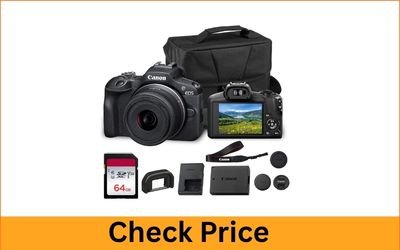
My package arrived safely in a well-protected box with every accessory arranged neatly inside. I opened it and found the Canon EOS R100 body, RF-S 18–45mm lens, battery, charger, neck strap, camera cover, lens caps, shoulder bag, and 64GB memory card. The bundle was ready for my first shoot.
Image and Video Quality: I tested the camera for travel photos, family moments, and casual outdoor shooting. The 24.1MP APS-C CMOS sensor delivered sharp images with vibrant colors, while the DIGIC 8 processor handled image processing smoothly. The 4K 24p video and Full HD 60p recording gave me enough quality for everyday content creation. I found the image output suitable for anyone moving beyond smartphone photography.
Autofocus and Image Stabilization: I used the camera for portraits and moving subjects and found the Dual Pixel CMOS AF system responsive. The 143 autofocus zones helped me keep subjects clear, and the eye detection worked well for people photography. For someone searching for a small camera for beginners, I found the reliable autofocus and lens-based stabilization helpful because they reduced the difficulty of capturing sharp handheld shots.
Compact and Easy-to-Use Design: I carried this camera during trips and appreciated its lightweight body. The simple menu system and automatic shooting modes helped me focus on composition instead of adjusting complicated settings. The electronic viewfinder and familiar controls made the transition from a phone camera easier.
Battery Life and Connectivity: I tested the battery during normal shooting sessions and found the 1,040mAh battery practical for daily use. The Wi-Fi and Bluetooth connection allowed me to transfer photos quickly to my phone. I also liked the webcam support through USB connectivity.
Lens and Upgrade Options: I used the included RF-S 18–45mm lens for portraits, travel scenes, and everyday photography. The Canon RF mount gives room for future upgrades with additional RF lenses, allowing me to expand my photography skills over time.
Best For: First-time mirrorless camera users
Pros
- Complete starter camera bundle
- Sharp photo quality
- Reliable autofocus system
- Lightweight travel design
- Easy wireless transfers
- Expandable RF lens system
Cons
- Limited advanced controls
- Cropped 4K video
3. CANON EOS R50 RF-S18-45mm 24.2MP Touchscreen Mirrorless Small Camera
| Specification | Details |
|---|---|
| Sensor Type | 24.2MP APS-C CMOS |
| Image Processor | DIGIC X |
| Video Resolution | 4K 30fps oversampled |
| Included Lens | RF-S18-45mm F4.5-6.3 IS STM |
| Autofocus System | Dual Pixel CMOS AF II |
| Continuous Shooting | Up to 15 fps |
| Display | Vari-angle touchscreen LCD |
| Connectivity | Wi-Fi and Bluetooth |
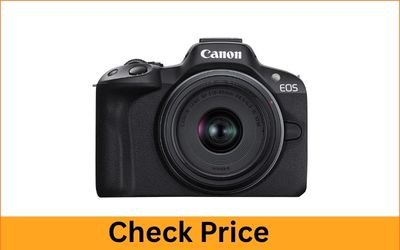
The shipment reached my doorstep in a secure box with the camera parts arranged carefully inside. I opened it and found the Canon EOS R50 body, RF-S18-45mm lens, LP-E17 battery, charger, neck strap, lens caps, micro HDMI cable, and quick start guide. Everything was protected and ready for setup.
Image and Video Quality: I tested this camera during travel, outdoor photography, and daily content creation. The 24.2MP APS-C sensor with the DIGIC X processor delivered detailed images with accurate colors. The 6K oversampled 4K video recording produced smooth and sharp footage, while the ISO range helped me capture clearer shots in challenging lighting conditions.
Autofocus and Image Stabilization: I used the camera for portraits, moving subjects, and video recording, and the Dual Pixel CMOS AF II system performed consistently. The 651 autofocus zones covered a wide area of the frame, while subject detection helped track people, animals, and vehicles. The lens stabilization also helped me capture steadier handheld shots.
Compact and Easy-to-Use Design: I carried this small camera for beginners on several trips because its lightweight one-pound body was easy to handle for long periods. The vari-angle touchscreen, electronic viewfinder, and smartphone-like menu system made shooting comfortable. I liked that the A+ Assist mode automatically selected suitable settings when I was learning different photography situations.
Battery Life and Connectivity: I used the camera with the Canon Camera Connect app and found transferring photos to my phone simple. The Wi-Fi and Bluetooth features worked smoothly for remote control and quick sharing. The battery lasted well for short shooting sessions, but I kept a spare battery for longer outings.
Lens and Upgrade Options: I used the included RF-S18-45mm lens for everyday photography, portraits, and travel scenes. The Canon RF mount gave me the flexibility to explore additional lenses later, including telephoto and prime options as my photography skills developed.
Best For: Travel photography and content creation
Pros
- Excellent photo quality
- Fast autofocus tracking
- Lightweight travel design
- Sharp 4K video
- Easy touchscreen controls
- Strong lens ecosystem
Cons
- No in-body stabilization
- Short battery endurance
4. DIGITAL CAMERA 48MP FHD 16X Zoom Anti-Shake Compact Small Camera
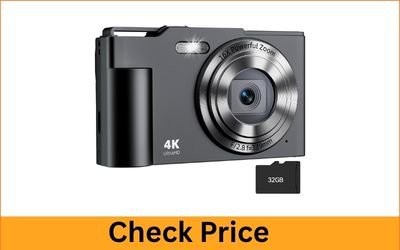
| Specification | Details |
|---|---|
| Photo Resolution | 48MP image capture |
| Video Recording | 1080p FHD video |
| Digital Zoom | 16X digital zoom |
| Image Sensor | CCD sensor technology |
| Display Screen | 2.4-inch LCD display |
| Battery Capacity | 1000mAh rechargeable battery |
| Storage Included | 32GB memory card |
| Camera Weight | 81g lightweight design |
The package arrived safely in a compact box with every accessory organized properly. I found the digital camera, 32GB card, USB Type-C cable, lanyard, camera bag, and user manual inside. The lightweight body and simple controls gave me a positive first impression while unboxing.
Image and Video Quality: I used this camera during family trips and casual outdoor activities to capture everyday moments without carrying heavy equipment. The 48MP photo mode delivered clear images with natural colors in good lighting, while the 1080p FHD video recording helped me save short travel clips easily. I also enjoyed using the 21 creative filters for vintage, black-and-white, and artistic effects. The 16X digital zoom was helpful for distant subjects, although image quality decreased when zooming too far.
Autofocus and Image Stabilization: While testing this camera, I noticed the autofocus worked better for stationary subjects and portraits. The 9 focus points and face detection helped me capture family photos more accurately, but the focus speed was slower when I photographed moving children. The digital anti-shake feature reduced minor hand movements during casual shooting, making handheld photos more stable, though it could not replace optical stabilization.
Compact and Easy-to-Use Design: I carried this camera throughout several outings because its 81g lightweight body was comfortable for long periods. The 4.1 × 2.1 × 3-inch size easily fit into my travel bag, and the simple menu allowed me to switch between camera modes quickly. The durable plastic construction handled regular handling well, making it suitable for younger users who need a reliable everyday camera.
Battery Life and Connectivity: The 1000mAh rechargeable battery supported up to 180 minutes of video recording, which was enough for my day trips. I liked charging it through the included USB Type-C cable because I could use a power bank while traveling. The webcam mode also added flexibility for online meetings and video calls.
Lens and Upgrade Options: The fixed lens design kept the camera simple and lightweight for casual photography. I found this small camera for beginners suitable for users who want easy shooting without adjusting complicated lens settings. The fixed aperture range of F2.8–F4.5 works for everyday photos, but there are no interchangeable lenses or upgrade options available.
Best For: Kids, travel, and casual photographers
Pros
- Lightweight pocket-friendly design
- Includes useful accessories package
- Easy controls for beginners
- Durable everyday camera body
- Good battery performance
- Creative filter selection
Cons
- Slow autofocus in motion
- Limited low-light image quality
5. NIKON Z50 II 20.9MP Dual Lens Hybrid Mirrorless Small Camera
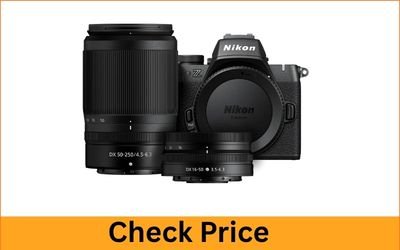
| Specification | Details |
|---|---|
| Image Sensor | 20.9MP APS-C DX CMOS |
| Video Recording | 4K UHD 60fps |
| Autofocus System | 209-point hybrid AF |
| Lens Mount | Nikon Z Mount |
| Included Lenses | 16-50mm and 50-250mm VR |
| Display Screen | 3.2-inch vari-angle touchscreen |
| Battery Capacity | EN-EL25a 1250mAh |
| Wireless Features | Wi-Fi, Bluetooth, SnapBridge |
The package arrived on schedule in a strong protective box with every component securely placed. I received the Nikon Z50 II body, two NIKKOR Z DX lenses, battery, USB charger, neck strap, lens caps, hot shoe cover, and documentation. The camera felt lightweight and professional when I opened it.
Image and Video Quality: I tested this camera during weekend trips and family events where I wanted detailed photos and smooth videos. The 20.9MP APS-C sensor delivered sharp images with accurate colors, and the larger sensor performed well in different lighting conditions. I recorded 4K UHD 60fps videos that looked smooth, while the Full HD 120fps slow-motion mode added creative options. The 31 built-in Picture Control presets helped me create different styles directly in the camera without extra editing.
Autofocus and Image Stabilization: During my outdoor photography sessions, the 209-point hybrid autofocus system quickly tracked subjects with impressive accuracy. I photographed people, pets, and moving objects, and the intelligent subject detection helped maintain focus. The dedicated bird and airplane modes were useful when capturing distant moving subjects. The optical VR stabilization from both lenses reduced camera shake and helped me capture sharper handheld photos.
Compact and Easy-to-Use Design: I carried the Z50 II with both lenses during travel because the setup remained manageable at around 2.4 pounds. The 3.2-inch fully articulating touchscreen made it easier for me to capture creative angles, selfies, and video content. The electronic viewfinder provided a clear shooting experience, while automatic scene modes helped me capture moments quickly without adjusting many settings.
Battery Life and Connectivity: The battery lasted well for casual shooting, although I preferred carrying a spare battery during longer trips. For users searching for a small camera for beginners, this model offers easy wireless sharing through Wi-Fi, Bluetooth, and Nikon SnapBridge. I transferred photos to my phone quickly and enjoyed downloading creative presets through Nikon’s cloud features.
Lens and Upgrade Options: The included 16-50mm and 50-250mm lenses covered wide shots, portraits, and distant subjects during my travels. The Nikon Z mount gave me access to a growing collection of compatible lenses, allowing me to upgrade my setup later. I appreciated having two versatile lenses without needing immediate additional purchases.
Best For: Travel photography and content creators
Pros
- Excellent image quality output
- Fast subject tracking autofocus
- Includes two versatile lenses
- Smooth 4K video recording
- Lightweight travel-friendly setup
- Easy wireless photo sharing
Cons
- Battery needs frequent charging
- Memory card sold separately
6. OM SYSTEM E-M10 Mark IV 20MP Stabilized Micro Four Thirds Small Camera
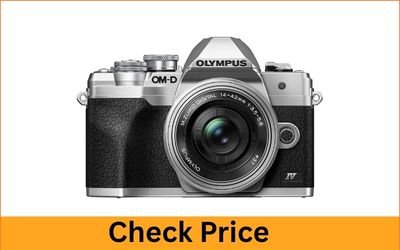
| Specification | Details |
|---|---|
| Image Sensor | 20MP Live MOS CMOS |
| Video Recording | 4K DCI video |
| Stabilization System | 5-axis IBIS |
| Lens Mount | Micro Four Thirds |
| Included Lens | 14-42mm EZ zoom lens |
| Display Screen | 3-inch flip-down touchscreen |
| Battery Capacity | BLS-50 1175mAh |
| Wireless Features | Wi-Fi and Bluetooth |
My order arrived safely in a well-sealed package with all components protected inside. I found the camera body, M.Zuiko 14-42mm EZ lens, battery, USB charger, charging cable, shoulder strap, lens caps, hot shoe cover, and documentation included. The compact silver body felt comfortable from the moment I handled it.
Image and Video Quality: I tested this camera during travel walks and outdoor photography sessions where I wanted professional-looking results without carrying heavy equipment. The 20MP Live MOS sensor produced detailed images with vibrant colors, while the TruePic VIII processor helped maintain accurate tones. I recorded 4K DCI video clips and found the quality suitable for travel videos and creative projects. The 16 Art Filters, including Instant Film effects, allowed me to create unique styles directly from the camera. The ISO range up to 25,600 also helped me capture cleaner images in lower lighting conditions.
Autofocus and Image Stabilization: While photographing family moments and street scenes, the 121-point contrast autofocus system performed reliably for most subjects. Face and eye detection helped me capture portraits more easily, although fast-moving subjects required more patience. The 5-axis in-body image stabilization was one of my favorite features because it reduced hand movement and provided up to 4.5 stops of compensation for sharper handheld shots.
Compact and Easy-to-Use Design: I carried this camera on several trips because the 1.1-pound body was easy to pack and comfortable for all-day use. This small camera for beginners gave me a simple shooting experience with room to learn more advanced controls later. The 3-inch flip-down touchscreen was useful for selfies, vlogging, and low-angle shots. The electronic viewfinder provided a clear preview, and the intuitive menu system made switching between shooting modes simple.
Battery Life and Connectivity: The battery provided enough power for regular travel photography, but I preferred carrying an extra battery during longer outings. Bluetooth and Wi-Fi connectivity allowed me to transfer photos quickly through the OI Share smartphone app. The wireless features made sharing travel images convenient without needing additional accessories.
Lens and Upgrade Options: The included 14-42mm EZ lens covered everyday photography needs, including landscapes, portraits, and casual street shots. The Micro Four Thirds mount opened access to many compatible lenses from OM System and Panasonic. I liked that I could start with the included lens and upgrade later with options such as telephoto or specialized lenses.
Best For: Travel, vlogging, and creative photography
Pros
- Extremely lightweight mirrorless design
- Excellent image stabilization system
- Sharp detailed photo quality
- Useful flip-down touchscreen
- Wide lens compatibility options
- Creative built-in art filters
Cons
- Slower moving subject autofocus
- No weather sealing protection
7. FUJIFILM X-M5 26.1MP APS-C Creator Mirrorless Small Camera
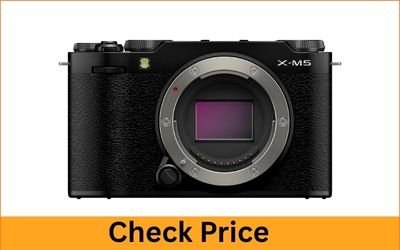
| Specification | Details |
|---|---|
| Image Sensor | 26.1MP APS-C X-Trans CMOS 4 |
| Video Recording | 6.2K 30fps / 4K 60fps |
| Autofocus System | 425-point hybrid AF |
| Lens Mount | Fujifilm X Mount |
| Display Screen | 3-inch articulating touchscreen |
| Wireless Features | Wi-Fi and Bluetooth |
| Battery Type | NP-W126S rechargeable battery |
| Camera Weight | 1.38 lbs lightweight body |
My package arrived in excellent condition with a securely sealed box protecting every component inside. I received the Fujifilm X-M5 camera body, rechargeable battery, USB charger, shoulder strap, body cap, rear lens cap, hot shoe cover, and documentation. The compact design immediately felt easy to carry.
Image and Video Quality: I tested this camera during city walks and travel photography sessions where I wanted strong image quality in a small setup. The 26.1MP APS-C X-Trans CMOS 4 sensor produced detailed photos with Fujifilm’s signature colors, and the X-Processor 5 engine helped maintain smooth performance. For anyone searching for a small camera for beginners, the X-M5 offers impressive image output with creative Film Simulations that make photos look unique directly from the camera. I recorded 6.2K video at 30fps and 4K 60fps footage, which gave me flexible options for content creation.
Autofocus and Image Stabilization: During my testing, the 425-point hybrid autofocus system performed quickly for portraits, street scenes, and moving subjects. The AI-based subject detection recognized people, animals, birds, and vehicles effectively. I found the digital stabilization useful while recording videos, although it did not provide the same results as cameras with built-in mechanical stabilization for still photography.
Compact and Easy-to-Use Design: I carried the X-M5 throughout my trips because the 1.38-pound body was easy to fit inside my small camera bag. The 3-inch fully articulating touchscreen helped me capture selfies, overhead shots, and vertical content comfortably. The simple controls, exposure dials, and creator-friendly video modes made the camera enjoyable to use.
Battery Life and Connectivity: The battery lasted around two hours during active shooting, so I preferred carrying an extra battery for longer travel days. Wi-Fi and Bluetooth connectivity allowed me to transfer photos and control the camera remotely through the Fujifilm XApp. The USB and Micro HDMI connections also made transferring and viewing content easier.
Lens and Upgrade Options: The Fujifilm X-mount system gave me access to a wide range of compatible lenses. Since this model comes as a body-only camera, I could choose lenses based on my photography needs. Options like everyday zoom and telephoto lenses allowed me to expand my setup gradually for different shooting styles.
Best For: Creative photography and video creators
Pros
- Beautiful Fujifilm color output
- Excellent high-resolution video features
- Compact travel-friendly camera body
- Fast intelligent autofocus system
- Flexible articulating touchscreen display
- Wide lens selection available
Cons
- Lens requires separate purchase
- Limited battery endurance during use
How to Choose the Best Small Camera for Beginners?
When I choose the best small camera for beginners, I look for something that is easy to carry, simple to use, and capable of taking good-quality photos and videos. I do not want a camera with complicated controls that makes learning photography difficult. Instead, I prefer a compact camera that gives me useful features while still allowing me to improve my skills over time.
Check Camera Size: I first consider the overall size of the camera. I prefer a small and lightweight model because it is easier for me to carry while traveling, walking, or taking everyday photos. A compact design also makes it more convenient when I want to keep the camera in a small bag.
Look at Image Quality: I pay close attention to image quality because this is one of the main reasons I want a dedicated camera. I check the sensor size, image resolution, and overall image performance. I prefer a camera that can produce clear and detailed photos in different lighting conditions.
Choose Simple Controls: As a beginner, I want controls that are easy to understand. I look for simple menus, clearly labeled buttons, and automatic shooting modes. Good beginner-friendly controls allow me to start taking photos immediately while giving me the option to learn manual settings later.
Check Autofocus Performance: I consider autofocus very important, especially when I am photographing people, pets, or moving subjects. I look for a camera with reliable autofocus that can quickly find and track my subject. Good autofocus helps me capture sharp photos without needing advanced photography skills.
Consider Video Features: I also check the camera’s video capabilities because I may want to record travel clips, family moments, or content for social media. I look at the supported video resolution, frame rates, stabilization, and microphone options. These features can make a small camera more useful for both photos and videos.
Look for Good Battery Life: I check the battery performance before choosing a camera. A small camera may have a small battery, so I want one that can last through a reasonable amount of shooting. I also consider whether the battery can be charged through USB, which can make charging more convenient when I am away from home.
Check the Lens or Zoom: I consider the camera’s lens because it affects the types of photos I can take. A useful zoom range can help me capture subjects that are close or far away without carrying extra lenses. For a beginner, I prefer a flexible lens that works well for everyday photography.
Consider the Display and Viewfinder: I look at how easily I can frame my photos. A clear display makes it easier for me to compose shots, especially outdoors. Some cameras also have an electronic viewfinder, which can be useful in bright sunlight and give me another way to frame my subject.
Check Connectivity: I prefer a small camera with convenient connectivity features such as Wi-Fi or Bluetooth. These features can make it easier for me to transfer photos and videos to my smartphone. Quick sharing is especially useful when I want to post my photos on social media.
Compare Price and Long-Term Value: Finally, I compare the camera’s price with its features and future usefulness. I do not choose the cheapest camera automatically. I consider image quality, ease of use, battery life, accessories, and overall performance. For me, the best small camera for beginners is one that is easy to carry today and still useful as my photography skills improve.
FAQs About the Best Small Camera for Beginners
Question: What should beginners look for when choosing a small camera?
Answer: Beginner should consider ease of use, image quality, portability, battery life, controls, and features that match their needs before buying a camera designed for simple learning and everyday photography purposes.
Question: Is a small camera better than a smartphone for beginners?
Answer: A small camera can provide better handling, optical features, creative controls, and improved consistency compared with smartphones for beginners who want to learn photography skills beyond basic mobile image capture.
Question: What features make a small camera beginner friendly?
Answer: Beginner friendly cameras usually include automatic modes, simple menus, comfortable grips, clear screens, lightweight designs, and helpful settings that allow new users to practice photography without complicated technical adjustments initially.
Question: Can beginners take professional looking photos with a small camera?
Answer: Beginners can capture professional looking photos with a small camera by learning composition, lighting, and settings while using quality lenses and features available on their chosen camera model for results.
Question: How much should a beginner spend on a small camera?
Answer: Beginners should choose a budget based on their goals, features required, and experience level while avoiding unnecessary expenses for advanced functions they may not use during their early photography journey.
Question: Why is a small camera ideal for beginner photographers?
Answer: A small camera is ideal for beginners because it offers portability, easier handling, dedicated photography features, and a simpler learning experience compared with complex professional equipment while developing creative skills.
Question: How do I choose the right small camera for beginners?
Answer: Choosing a small camera involves checking sensor size, zoom range, video capability, controls, durability, and reviews to find a model that suits beginner photography needs and provides reliable term value.
Question: Are small cameras suitable for travel and daily photography?
Answer: Yes many small cameras are suitable for travel and daily photography because they are lightweight, convenient, and easy to carry while still delivering better control than basic smartphone cameras alone.
Question: How can beginners improve photography skills with a small camera?
Answer: Beginners can improve photography skills with a small camera by practicing regularly, exploring manual settings, studying composition, and experimenting with different lighting conditions to understand how each feature affects images.
Question: Is the best small camera for beginner expensive?
Answer: The best small camera for beginner depends on personal preferences, budget, and goals because different models offer various features for learning, creativity, travel, and everyday photography experiences with different advantages.