


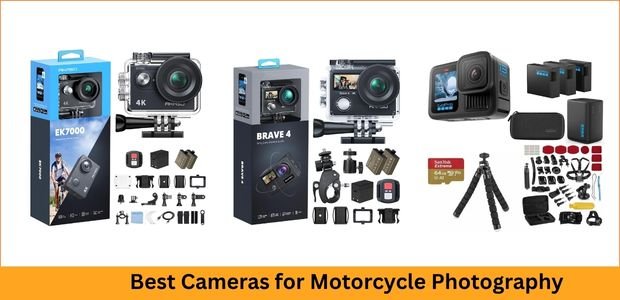
After testing and comparing several models designed for riders, I found that choosing the right camera is not only about resolution numbers—it depends on stabilization, lens performance, weather protection, battery endurance, and how well the device captures fast-moving road scenes. I reviewed different action cameras, 360-degree cameras, and motorcycle recording systems by focusing on real riding situations, including highway routes, uneven roads, changing lighting conditions, and outdoor adventures. These evaluations helped identify which options provide reliable results for riders looking for the best camera for motorcycle photography.
Top Recommendation: AKASO EK7000 4K Waterproof Action Camera for Motorcycle Photography
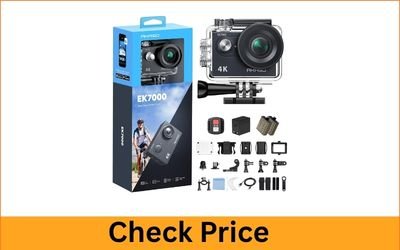
AKASO EK7000 features 4K 30fps video recording, 20MP photos, and a 170° ultra-wide lens for capturing detailed motorcycle rides. With waterproof protection, EIS stabilization, Wi-Fi connectivity, and multiple mounting accessories, it is a practical choice for everyday riders.
Best Camera for Motorcycle Photography – Full List
- AKASO EK7000 4K Waterproof Action Camera for Motorcycle Photography – Best-Value
- AKASO Brave 4 Adjustable Angle Action Camera for Motorcycle Photography – Best-Selling
- GOPRO HERO13 BLACK 5.3K Stabilized Action Camera for Motorcycle Photography – Pro-Quality
- DJI Osmo Action 5 Pro 4K OLED Touch Camera for Motorcycle Photography – Ultra-Premium
- AKASO 360 5.7K Dual Sensor Camera for Motorcycle Photography – All-Purpose
- INSTA360 X5 8K Replaceable Lens Camera for Motorcycle Photography – High-End
- TELESIN 180 Adjustable Helmet Chin Mount for Motorcycle Photography – Budget-Friendly
- ZAKOTU Mini 1080P Lightweight Body Camera for Motorcycle Photography – Best-Budget
- VSYSTO D6L Dual Front Rear Dash Camera for Motorcycle Photography – Value for Money
Best Camera for Motorcycle Photography
1. AKASO EK7000 4K Waterproof Action Camera for Camera for Motorcycle Photography

| Specification | Details |
|---|---|
| Sensor Technology | CMOS Image Sensor |
| Video Recording | 4K 30fps, 2.7K 30fps, 1080p 60fps |
| Photo Resolution | 20MP Still Photos |
| Lens Field of View | 170° Ultra-Wide Fisheye Lens |
| Maximum Aperture | f/2.8 |
| Waterproof Protection | 131ft / 40m With Case |
| Display Size | 2-inch LCD Screen |
| Wireless Connectivity | Wi-Fi Up To 10m Range |
My order arrived right on time in a sturdy cardboard package, and the contents were carefully arranged inside. I received the camera, waterproof case, two batteries, charger, remote control, mounts, clips, tethers, USB cable, lens cloth, protective backdoor, and quick start guide.
Image Quality: I tested the camera on daytime motorcycle routes and found the 4K30fps video delivered clear details with balanced colors. The 20MP photo mode captured sharp outdoor images, and the 170° wide-angle view covered more of the riding environment. I found this camera useful as a camera for motorcycle photography because it provides reliable daylight results without requiring expensive equipment.
Lens Options: The fixed 170° fisheye lens gave me a wider perspective for action scenes and road recordings. I liked the ability to capture more surroundings in a single frame, while the 4x digital zoom helped me adjust photo composition when needed. The lens design is simple but effective for outdoor activities.
Stabilization Performance: I recorded footage on uneven roads and noticed the Electronic Image Stabilization reduced vibration during movement. The videos looked smoother when I reviewed my rides, especially during faster sections and rough surfaces.
Low-Light Shooting: I found the camera performs best in bright conditions because it does not include HDR or night vision features. During evening rides, the footage lost some details, so I preferred using additional lighting for darker locations.
Weather Protection: The waterproof case handled rainy rides and outdoor environments well. I felt comfortable using it near water because it supports up to 131ft depth, although I kept the wireless remote protected since it is not waterproof.
Battery Life: The included two 1050mAh batteries helped me continue recording during longer trips. I usually received around 60 minutes of 4K recording from each battery, and the charger made preparing spare batteries easier before rides.
Mounting & Portability: I found the compact 2 oz design convenient to carry and install. The included helmet mounts, handlebar mounts, clips, and adhesive accessories gave me several mounting options, while Wi-Fi connectivity allowed quick video transfers through the AKASO GO app.
Best For: Budget riders needing versatile action capture
Pros
- Clear daytime recording quality
- Complete accessory package included
- Lightweight portable camera design
- Smooth EIS stabilization performance
- Reliable waterproof case protection
- Easy wireless remote control
Cons
- Limited night recording performance
- Built-in microphone quality issues
2. AKASO Brave 4 Adjustable Angle Action Camera for Camera for Motorcycle Photography
| Specification | Details |
|---|---|
| Sensor Technology | CMOS Image Sensor |
| Video Recording | 4K 30fps, 2K 30fps, 1080P 60fps |
| Photo Resolution | 20MP Still Photos |
| Viewing Angle | Adjustable 170°, 140°, 110°, 70° |
| Waterproof Rating | 131ft / 40m With Case |
| Screen Setup | 2-inch Rear + 0.96-inch Front |
| Battery Capacity | Two 1050mAh Batteries |
| Connectivity | Wi-Fi And HDMI Support |
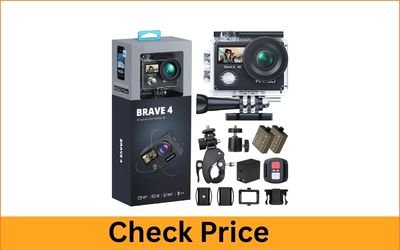
The shipment reached my doorstep safely in a well-protected package, and I enjoyed organizing the accessories after opening it. The box included the camera, waterproof case, two batteries, dual charger, remote wristband, mounts, clips, tethers, USB cable, and protective back door.
Image Quality: I recorded several outdoor rides with the AKASO Brave 4 and found the 4K30fps video and 20MP photos delivered good detail for everyday adventures. The adjustable viewing angles helped me choose between wide and focused shots, while WDR improved exposure when lighting conditions changed.
Lens Options: The fixed focus fisheye lens gave me flexibility with its adjustable viewing choices of 170°, 140°, 110°, and 70°. For riders who need a wider perspective and simple setup, this lens design makes it a useful camera for motorcycle photography: because it captures different riding scenes without requiring lens changes. The 5x digital zoom was also helpful for basic distance framing.
Stabilization Performance: I tested the camera on moving rides and noticed the built-in smart gyroscope with EIS reduced shaking effectively. The footage stayed smoother on uneven roads, making my action clips easier to watch after longer trips.
Low-Light Shooting: I found this model handled evening conditions better than many budget cameras. The footage remained usable during dusk rides, although image quality still depended on available lighting and did not match premium action cameras.
Weather Protection: The waterproof case gave me confidence during rainy rides and outdoor activities. I used it around water without concerns because it supports up to 131ft depth, and the WDR feature helped maintain better exposure in changing weather conditions.
Battery Life: The included two 1050mAh batteries provided around 90 minutes of recording each under suitable conditions. I found the battery performance useful for short trips, but I would carry extra batteries for longer journeys, especially when recording in 4K.
Mounting & Portability: I liked the compact body because it was easy to attach and carry. The handlebar mount, helmet mount, and seven attachment options helped me create different shooting angles. The front and rear screens also made framing easier, while Wi-Fi and HDMI support simplified sharing.
Best For: Budget riders wanting versatile 4K action
Pros
- Adjustable viewing angles available
- Dual screens improve framing
- Strong accessory package included
- Smooth stabilization during rides
- Waterproof case works reliably
- Easy wireless sharing setup
Cons
- Battery drains faster in 4K
- Video lacks premium sharpness
3. GOPRO HERO13 BLACK 5.3K Stabilized Action Camera for Camera for Motorcycle Photography
| Specification | Details |
|---|---|
| Sensor Technology | CMOS Image Sensor |
| Video Recording | 5.3K60fps, 4K120fps, 2.7K240fps |
| Photo Resolution | 27MP HDR Photos |
| Lens Field Of View | 156° Ultra-Wide Angle |
| Maximum Aperture | f/2.8 |
| Waterproof Protection | 33ft / 10m Without Housing |
| Battery Capacity | 1900mAh Enduro Battery |
| Display Size | 2.27-inch LCD Screen |
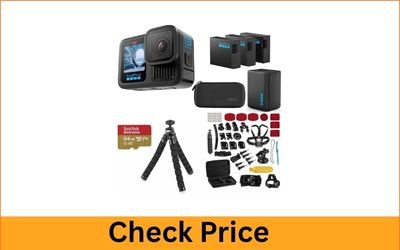
The retail package arrived safely in a strong protective box, and I found every component packed securely without any damage. I received the GoPro HERO13 Black, three Enduro batteries, dual charger, 64GB microSD card, helmet mount kit, camera case, accessory kit, and warranty documents.
Image Quality: I captured several riding videos and outdoor clips with this camera, and the 5.3K60fps resolution delivered highly detailed footage with excellent colors. The 27MP HDR photo mode produced sharp images, while 10-bit color and GP-Log support gave me more options when adjusting footage during editing.
Lens Options: The fixed ultra-wide lens provided a 156° field of view that helped me record immersive riding scenes. I liked the natural perspective it created, and the 10x digital zoom was useful for basic framing adjustments. The HB-Series lens compatibility also gives me room for future creative upgrades.
Stabilization Performance: I tested the camera on uneven roads, fast turns, and rough surfaces where vibration was unavoidable. HyperSmooth 6.0 stabilization with Horizon Lock kept my footage smooth and balanced, making it an excellent camera for motorcycle photography when recording high-speed rides and action scenes that require steady results.
Low-Light Shooting: I used the camera during evening rides and noticed HDR and HLG recording helped maintain better highlights and shadow details. The footage remained cleaner than many standard action cameras when lighting conditions changed.
Weather Protection: The waterproof body handled rain, mud, and outdoor conditions without additional housing. I also appreciated the Enduro battery performance in colder environments because it supports operation down to 14°F (-10°C).
Battery Life: The three included 1900mAh Enduro batteries helped me continue recording during longer adventures. I usually received around 1.5 hours per battery at 5.3K30 or 4K30 settings, while the dual charger allowed me to recharge two batteries together.
Mounting & Portability: I found the compact 5.4 oz design easy to carry and attach. The 47-piece accessory kit provided multiple mounting choices for helmets, handlebars, and gear. The front and rear screens also made self-recording and framing easier during trips.
Best For: Professional riders creating cinematic footage
Pros
- Exceptional 5.3K video detail
- Advanced stabilization system
- Multiple batteries included
- Durable waterproof construction
- Dual screen functionality
- Extensive mounting options
Cons
- Expensive premium camera
- Learning curve for beginners
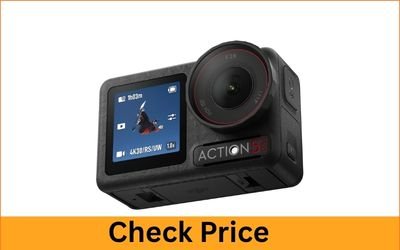
4. DJI Osmo Action 5 Pro OLED Touch Camera for Camera for Motorcycle Photography
| Specification | Details |
|---|---|
| Sensor Technology | 1/1.3-inch CMOS Sensor |
| Video Recording | 4K120fps, 2.7K120fps, 1080p240fps |
| Photo Resolution | 40MP Still Photos |
| Lens Field Of View | 155° Ultra-Wide Lens |
| Dynamic Range | 13.5-Stop Dynamic Range |
| Waterproof Rating | IP68 Up To 20m |
| Battery Capacity | 1950mAh Battery |
| Display Type | Dual OLED Touchscreens |
The compact package arrived safely with a protective outer box, and I noticed every accessory was placed neatly inside. I received the DJI Osmo Action 5 Pro, battery, Type-C cable, quick-release mount, protective frame, lens cover, rubber protector, adhesive base, and mounting screw.
Image Quality: I tested this camera during outdoor rides and travel activities, and the 1/1.3-inch sensor delivered sharp 4K footage with vibrant colors. The larger pixels helped capture more details, while 10-bit D-Log M and HDR recording gave me better control during editing. The 40MP photo mode also produced detailed images for everyday adventures.
Lens Options: The fixed 155° ultra-wide lens provided a natural action perspective and captured a wide view during moving shots. I liked how it covered more of the surroundings without requiring manual adjustments. The optional FOV Boost Lens and 2x digital zoom also gave me additional framing flexibility.
Stabilization Performance: I recorded footage on uneven roads and fast movements, and the 360° HorizonSteady system kept the horizon balanced. RockSteady and HorizonBalancing modes reduced unwanted shakes, allowing me to capture smoother action clips without using extra stabilization equipment.
Low-Light Shooting: I used this camera during evening rides and noticed the 1/1.3-inch sensor with 13.5-stop dynamic range handled darker scenes better than many action cameras. This makes it a strong camera for motorcycle photography when I need clearer footage during night rides, sunset routes, and changing light conditions.
Weather Protection: The IP68 waterproof body allowed me to use the camera in rain and wet environments without an additional case. I also appreciated its ability to work in temperatures from -20°C to 45°C, making it suitable for different outdoor conditions.
Battery Life: The 1950mAh battery provided long recording sessions, and I could capture up to 4 hours depending on settings. The fast Type-C charging helped me restore power quickly, which was useful before longer trips.
Mounting & Portability: I found the compact design easy to carry and attach to different setups. The magnetic quick-release mount made switching accessories faster, while the dual OLED screens helped me frame shots clearly in bright outdoor conditions.
Best For: Night riders creating professional footage
Pros
- Excellent low-light performance
- Powerful stabilization features
- Long battery recording time
- Dual OLED touchscreens included
- Waterproof without extra case
- Professional color profiles available
Cons
- Limited GPS functionality
- Advanced settings need learning
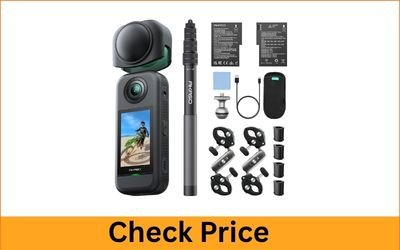
5. AKASO 360 5.7K Dual Sensor Action Camera for Camera for Motorcycle Photography
| Specification | Details |
|---|---|
| Sensor Technology | Dual 1/2-inch 48MP Sensors |
| Video Recording | 5.7K 360° Video |
| Photo Resolution | 72MP 360° Photos |
| Lens Type | 1.4mm Fisheye Lens |
| Maximum Aperture | f/2.25 |
| Display Size | 2.29-inch Touchscreen |
| Storage Support | Micro SDXC Card |
| Connectivity | Wi-Fi Connection |
The delivery arrived in a compact protected package, and I found the accessories arranged neatly when opening the box. I received the AKASO 360 camera, two rechargeable batteries, USB cable, motorcycle mounting kit, frame adapters, user manual, and app access details.
Image Quality: I tested the camera on motorcycle routes and outdoor trips, and the 5.7K 360° video quality captured wide immersive footage with impressive details. The dual 1/2-inch 48MP sensors helped produce sharper images, while the 72MP 360° photo mode gave me more freedom to capture and reframe scenes after recording.
Lens Options: The 1.4mm fisheye lens created a complete 360° perspective, allowing me to record everything around my riding environment. The fixed focus design worked well for action recording, and the invisible selfie stick feature helped me create creative third-person style shots without needing another person behind the camera.
Stabilization Performance: I tested the camera on uneven roads and noticed the 360° Horizon Lock maintained a level view even when the camera position changed. The advanced in-app stabilization reduced vibration effectively, making this a useful when I need smooth footage from different riding angles.
Low-Light Shooting: I used the camera during lower-light conditions and found the DNG8 RAW photo mode helped preserve more details in darker scenes. The f/2.25 aperture also supported better light capture, although additional lighting improved results during very dark environments.
Weather Protection: The water-resistant design handled outdoor riding conditions well, and I felt comfortable using it during changing weather. This makes it a reliable camera for motorcycle photography when I need equipment that can handle different outdoor environments. The durable construction and recycled material certification added extra value for riders who regularly record adventures.
Battery Life: The two included rechargeable batteries allowed me to test different recording situations, but I noticed the runtime was limited compared with traditional action cameras. For longer rides, I preferred using continuous USB power through my motorcycle setup.
Mounting & Portability: The included motorcycle mounting kit made installation simple, and the handlebar and frame adapters provided flexible positioning options. I liked the compact design and 2.29-inch touchscreen because controlling settings while preparing shots was straightforward.
Best For: Riders wanting immersive 360-degree footage
Pros
- Excellent 5.7K video quality
- True 360-degree recording ability
- Useful motorcycle mounting kit
- Smooth horizon stabilization system
- Creative reframing flexibility
- Easy mobile app editing
Cons
- Limited battery recording time
- Audio weak at high speeds
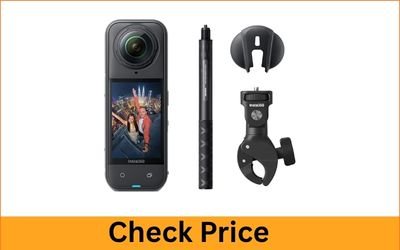
6. INSTA360 X5 8K Replaceable Lens Camera for Camera for Motorcycle Photography
| Specification | Details |
|---|---|
| Sensor Technology | Dual 1/1.28-inch CMOS Sensors |
| Video Recording | 8K30fps 360° Video |
| Photo Resolution | 72MP 360° Photos |
| Lens System | Replaceable Ultra-Wide Lenses |
| Maximum Aperture | f/2.0 |
| Waterproof Rating | 49ft / 15m Without Case |
| Battery Capacity | 2400mAh Battery |
| Display Size | 2.5-inch Touchscreen |
The delivery arrived in a premium protective package, and I found the camera and accessories arranged securely inside. I received the Insta360 X5 camera, invisible selfie stick, lens cap, heavy-duty clamp, 2400mAh battery, USB cable, and motorcycle mounting accessories.
Image Quality: I tested the camera during motorcycle rides and outdoor trips, and the 8K30fps 360° video delivered impressive detail from every direction. The dual 1/1.28-inch sensors captured clear footage with strong colors, while the 72MP photo mode allowed me to create highly detailed panoramic images. I also liked the flexibility of reframing shots after recording.
Lens Options: The replaceable lens system gave me extra confidence when using the camera in demanding environments. The dual ultra-wide lens setup captured a complete 360° view, and the ability to replace scratched lenses helped protect my investment during frequent outdoor use.
Stabilization Performance: I recorded footage on bumpy roads and fast-moving rides, and FlowState Stabilization with 360° Horizon Lock kept the video smooth and level. The camera handled sudden movements well, and the automatic leveling reduced the need for additional stabilization equipment.
Low-Light Shooting: I used the camera during evening rides and found the triple AI chip design helped reduce noise in darker scenes. The improved image processing maintained better details during low-light conditions, especially when compared with many basic action cameras.
Weather Protection: The waterproof design allowed me to use the camera during rain and wet riding conditions without an extra case. The rugged construction and replaceable lenses made it suitable for riders who record adventures in changing outdoor environments.
Battery Life: The 2400mAh battery provided long recording sessions, and I could capture several hours depending on settings. This makes it a practical camera for motorcycle photography when I need longer recording time during extended rides without constantly changing batteries. The fast charging feature also helped me restore power quickly before continuing my trips.
Mounting & Portability: I found the included heavy-duty clamp extremely useful for motorcycle mounting because it stayed secure during movement. The compact design, magnetic mounting system, and 2.5-inch touchscreen made setup and operation simple while riding.
Best For: Riders creating immersive 360 content
Pros
- Excellent 8K 360 video quality
- Replaceable lens protection system
- Smooth Horizon Lock stabilization
- Strong low-light processing ability
- Useful motorcycle mounting kit
- Creative reframing options
Cons
- Expensive premium camera
- Editing requires learning time
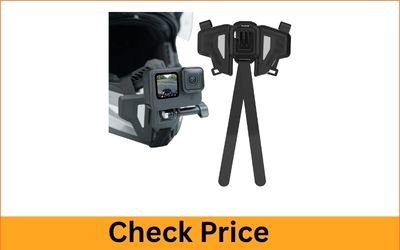
7. TELESIN 180 Adjustable Helmet Chin Mount for Camera for Motorcycle Photography
| Specification | Details |
|---|---|
| Brand | TELESIN |
| Mount Type | Helmet Chin Mount |
| Adjustment Range | 180° Adjustable Rotation |
| Material | Food-Grade Non-Slip Silicone |
| Weight | 80g / 2.82oz |
| Dimensions | 99 x 93 x 21mm |
| Compatibility | GoPro, DJI, Insta360, AKASO |
| Installation Type | Reusable Strap Mount |
The package arrived in a small protective box, and I found the mount, adapter, and mounting screw packed securely inside. I checked the build quality after opening it and noticed the silicone padding, adjustable parts, and compact design were organized properly.
Image Quality: This product does not capture images itself, but I tested it with different action cameras and found it provided a stable platform for recording. The mount supports popular cameras from GoPro, DJI Osmo Action, Insta360, and AKASO, allowing me to use my preferred camera setup.
Lens Options: The mount works with different camera models, so lens performance depends completely on the attached device. I liked that the adjustable adapter allowed me to position various cameras at different angles without changing the mounting system.
Stabilization Performance: I used this chin mount on motorcycle rides over different road surfaces and noticed the camera stayed securely positioned. The strong straps and non-slip silicone padding reduced unwanted movement, allowing my camera stabilization features to work more effectively. This helped me create smoother footage while using it as a camera for motorcycle photography setup during riding sessions.
Low-Light Shooting: This mount does not affect low-light performance because the attached camera controls image quality. I focused on maintaining a stable camera position so the connected action camera could capture clearer footage during different lighting conditions.
Weather Protection: The water-resistant design helped protect the mount during light rain and outdoor rides. The recycled material certification also added value, and I felt comfortable using it during regular motorcycle adventures where moisture and dust were possible.
Battery Life: The mount does not contain any battery system, so recording time depends entirely on the connected camera. I appreciated that the lightweight design added minimal weight to my helmet while allowing me to carry my camera setup comfortably.
Mounting & Portability: I found the 180° adjustment feature very useful because I could change the camera angle according to my riding position. The reversible adapter, reusable adhesive design, and one-hand installation made setup simple. The lightweight 80g construction kept my helmet comfortable during longer rides, and compatibility with many camera brands gave me flexibility.
Best For: Riders needing flexible helmet camera mounting
Pros
- Universal camera compatibility support
- Adjustable viewing angle design
- Lightweight helmet mounting solution
- Secure silicone grip padding
- Easy installation and removal
- Reusable mounting system
Cons
- May block some visors
- Fit varies between helmets
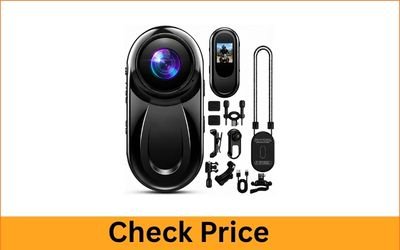
8. ZAKOTU Mini 1080P Lightweight Body Camera for Camera for Motorcycle Photography
| Specification | Details |
|---|---|
| Sensor Technology | CMOS Image Sensor |
| Video Recording | 1080P HD Video |
| Lens Type | 120° Wide-Angle Lens |
| Storage Support | Micro SD Up To 512GB |
| Weight | 26g / 0.9oz |
| Charging Port | USB-C Fast Charging |
| Battery Recording Time | Up To 120 Minutes |
| Display Size | 1-inch Built-In Screen |
The small package arrived safely in a compact box, and I found the camera and accessories arranged neatly inside. I received the mini body camera, USB-C cable, 360° swivel clip, magnetic lanyard, protective case, and user manual, making the setup process simple after unboxing.
Image Quality: I tested the camera during casual rides and outdoor activities, and the 1080P HD recording provided clear footage for everyday use. The CMOS sensor performed best in daylight, while the 120° wide-angle lens captured enough surrounding scenery for simple POV recordings and travel clips.
Lens Options: The fixed 120° ultra-wide lens gave me a broader view while recording outdoor scenes. I liked the compact design because it allowed me to capture moments without carrying a larger camera setup. The lens does not support interchangeable options, but it works well for basic hands-free recording.
Stabilization Performance: I used the camera on smoother routes and noticed the footage remained acceptable for casual recording. However, rough roads created visible shaking because the device does not include advanced stabilization features.
Low-Light Shooting: I tested the camera in dim conditions and found the results were limited. The footage quality was better in daylight, while darker environments reduced details and clarity. I preferred using it during daytime rides and outdoor activities.
Weather Protection: The water-resistant design allowed me to use the camera during light outdoor conditions, but I avoided heavy rain because it is not fully waterproof. For safer riding use, I kept the camera protected from strong moisture exposure.
Battery Life: The 120-minute battery performance gave me enough recording time for shorter trips. I found the USB-C charging and recording-while-charging feature useful when connected to a power bank or motorcycle charger. This makes it a practical camera for motorcycle photography when I need simple recording support for longer journeys without frequent battery changes.
Mounting & Portability: I liked the 26g lightweight body because it was almost unnoticeable when attached. The 360° rotating clip and magnetic mount allowed me to place it on bags, clothing, helmets, and other surfaces. Its compact size made carrying it easier compared with larger action cameras.
Best For: Lightweight casual POV recording
Pros
- Extremely lightweight camera design
- Simple hands-free recording setup
- Useful 360-degree mounting clip
- USB-C charging convenience
- Supports large memory cards
- Affordable everyday recording option
Cons
- No advanced stabilization system
- Limited low-light video quality
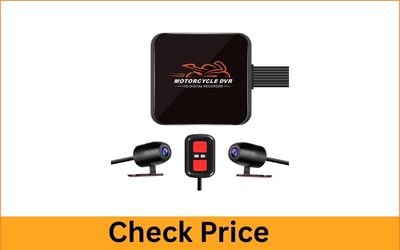
9. VSYSTO D6L Dual Front Rear Camera for Camera for Motorcycle Photography
| Specification | Details |
|---|---|
| Camera System | Dual Front & Rear Cameras |
| Video Resolution | 1080P HD Recording |
| Lens Field Of View | 130° Wide Angle |
| Night Vision | Starlight Night Vision |
| Storage Support | MicroSD Up To 256GB |
| Connectivity | Wi-Fi Mobile App |
| Safety Feature | G-Sensor Emergency Recording |
| Power Source | Motorcycle ACC Power |
The package arrived securely with all components protected inside the box, and I found the installation parts organized properly. I received two cameras, DVR host unit, mounting brackets, power cable, wired controller, extension cables, and adhesive accessories for fitting the system on my motorcycle.
Image Quality: I tested the dual-camera system during regular rides and found the 1080P front and rear recordings provided clear road coverage. The 130° wide-angle lenses captured enough surrounding details, while the H.264 recording format made playback simple. The video quality worked well for daily riding documentation and safety purposes.
Lens Options: The fixed 130° wide-angle lenses on both cameras provided a balanced view of the front and rear areas. The four-layer all-glass construction added durability, and I liked that both cameras maintained consistent coverage without requiring manual lens adjustments.
Stabilization Performance: I used the system on different road surfaces and found the built-in G-Sensor helped detect impacts and lock emergency recordings. The vibration handling was acceptable for regular riding, although stronger motorcycle vibrations could slightly affect sharpness.
Low-Light Shooting: I tested the cameras during evening rides and noticed the Starlight Night Vision feature helped capture usable footage in darker conditions. Headlights and street lighting improved visibility, although direct glare from vehicles could reduce some details.
Weather Protection: The waterproof front and rear cameras gave me confidence during rainy rides and wet conditions. I considered this a reliable camera for motorcycle photography option when I need weather-ready recording equipment for outdoor motorcycle use. The main DVR unit required placement under the seat because it is not waterproof.
Battery Life: The system does not rely on an internal battery because it connects directly to the motorcycle power supply. I liked that it automatically starts and stops with the ignition, allowing continuous recording without worrying about charging or battery replacement.
Mounting & Portability: I found the installation process straightforward because the package included long extension cables and adjustable camera brackets. The compact DVR unit fitted easily under my motorcycle seat, while the wired controller allowed quick emergency recording access.
Best For: Daily riders needing safety recording
Pros
- Dual front rear coverage
- Reliable emergency recording feature
- Useful Wi-Fi app connection
- Automatic ignition power control
- Waterproof camera construction
- Easy motorcycle installation setup
Cons
- Only 1080P video resolution
- Audio quality needs improvement
How Do You Choose the Best Camera for Motorcycle Photography for Your Needs?
When I choose the best camera for motorcycle photography, I look beyond image quality and brand name. Motorcycle photography can involve moving subjects, changing light, outdoor conditions, and fast-paced shooting. I want a camera that is easy to carry, responds quickly, and gives me enough control to capture sharp and attractive motorcycle photos in different situations.
Consider the Camera Type: I first decide which type of camera suits my photography style. I may choose a mirrorless camera, DSLR, compact camera, or action camera depending on how I plan to photograph motorcycles. A mirrorless camera can give me more control and lens options, while an action camera can be useful for riding shots and dynamic viewpoints.
Check Image Quality: I pay attention to the camera’s sensor size, resolution, and overall image quality. A camera with a good sensor can help me capture detailed motorcycle photos, especially when I want to crop or enlarge an image later. I also consider how well the camera performs in bright sunlight and lower-light conditions.
Look at Autofocus Performance: I consider autofocus very important when photographing a moving motorcycle. I want the camera to focus quickly and accurately so that I can capture sharp images while the motorcycle is moving toward, away from, or across my frame. Reliable subject tracking can also make fast-action photography easier.
Consider Shooting Speed: I check the camera’s continuous shooting or burst mode. When a motorcycle is moving quickly, I may not get many chances to capture the exact moment I want. A camera that can take several photos in quick succession gives me more opportunities to select the best frame afterward.
Choose the Right Lens Options: I also consider the lenses available for the camera. A wide-angle lens can help me capture the motorcycle along with its surroundings, while a telephoto lens can help me photograph a rider from a distance. For my needs, I choose a camera system that gives me access to the focal lengths I am likely to use.
Check Portability: I want my camera to be easy to carry when I am traveling or moving around with a motorcycle. A large camera and heavy lens can become uncomfortable during long rides or outdoor shoots. I therefore consider the total weight and size of the camera, lens, batteries, and other accessories.
Consider Weather Resistance: Motorcycle photography often happens outdoors, so I pay attention to weather sealing and overall durability. Dust, light rain, and changing outdoor conditions can create challenges. If I regularly photograph motorcycles outside, I prefer equipment designed to handle the conditions I am likely to encounter.
Check Video Features: I also consider video capabilities because motorcycle photography is not always limited to still images. Good video resolution, frame rates, stabilization, and autofocus can be useful when I want to record riding footage, promotional content, or short social media videos.
Look at Battery Life: I check battery performance before choosing a camera. Outdoor motorcycle photography can take several hours, and I may not always have access to a power source. A camera with dependable battery life, along with the option to carry spare batteries or use a power bank where supported, can make longer shoots more convenient.
Set a Practical Budget: Finally, I decide how much I want to spend on the complete setup rather than only the camera body. I also need to consider lenses, memory cards, spare batteries, protective equipment, and other accessories. I prefer to choose a camera that meets my actual photography needs without spending money on features I may rarely use.
FAQs About the Best Camera for Motorcycle Photography
Question: What is the best camera for motorcycle photography?
Answer: A mirrorless camera with fast autofocus, high burst speed, and good low light performance is ideal for capturing sharp motorcycle photos while riding or during action scenes.
Question: Is a DSLR or mirrorless camera better for motorcycle photography?
Answer: Mirrorless cameras are generally more convenient because they are lighter, offer fast autofocus, and provide excellent electronic viewfinders for tracking moving motorcycles.
Question: What camera features are important for motorcycle photography?
Answer: Look for fast autofocus, high continuous shooting speed, good image stabilization, strong low light performance, and weather resistance for outdoor motorcycle photography.
Question: What lens is best for motorcycle photography?
Answer: A versatile zoom lens, such as a 24 to 70mm, works well for portraits, close shots, and environmental motorcycle photos without changing lenses frequently.
Question: What camera is best for motorcycle racing photography?
Answer: A camera with reliable tracking autofocus, a fast burst rate, and a large buffer is best for capturing motorcycles moving quickly around racing tracks.
Question: Do I need a full frame camera for motorcycle photography?
Answer: No, a crop sensor camera can produce excellent motorcycle photos. Full frame models mainly provide advantages in low light, dynamic range, and depth of field.
Question: What is the best budget camera for motorcycle photography?
Answer: An entry level mirrorless camera with good autofocus and a suitable zoom lens can deliver impressive motorcycle photos without requiring an expensive professional camera system.
Question: Is image stabilization important for motorcycle photography?
Answer: Yes, image stabilization helps reduce camera shake and can produce sharper images, especially when photographing motorcycles handheld or using slower shutter speeds.
Question: What shutter speed should I use for motorcycle photography?
Answer: Start around 1/1000 second for fast action. Use slower speeds, such as 1/60 to 1/250 second, when creating intentional motion blur.
Question: Can an action camera be used for motorcycle photography?
Answer: Yes, action cameras are excellent for helmet, handlebar, and riding perspective shots, but dedicated cameras usually provide better image quality, lens choices, and creative control.